Story
The Clinic Of Warm Flesh
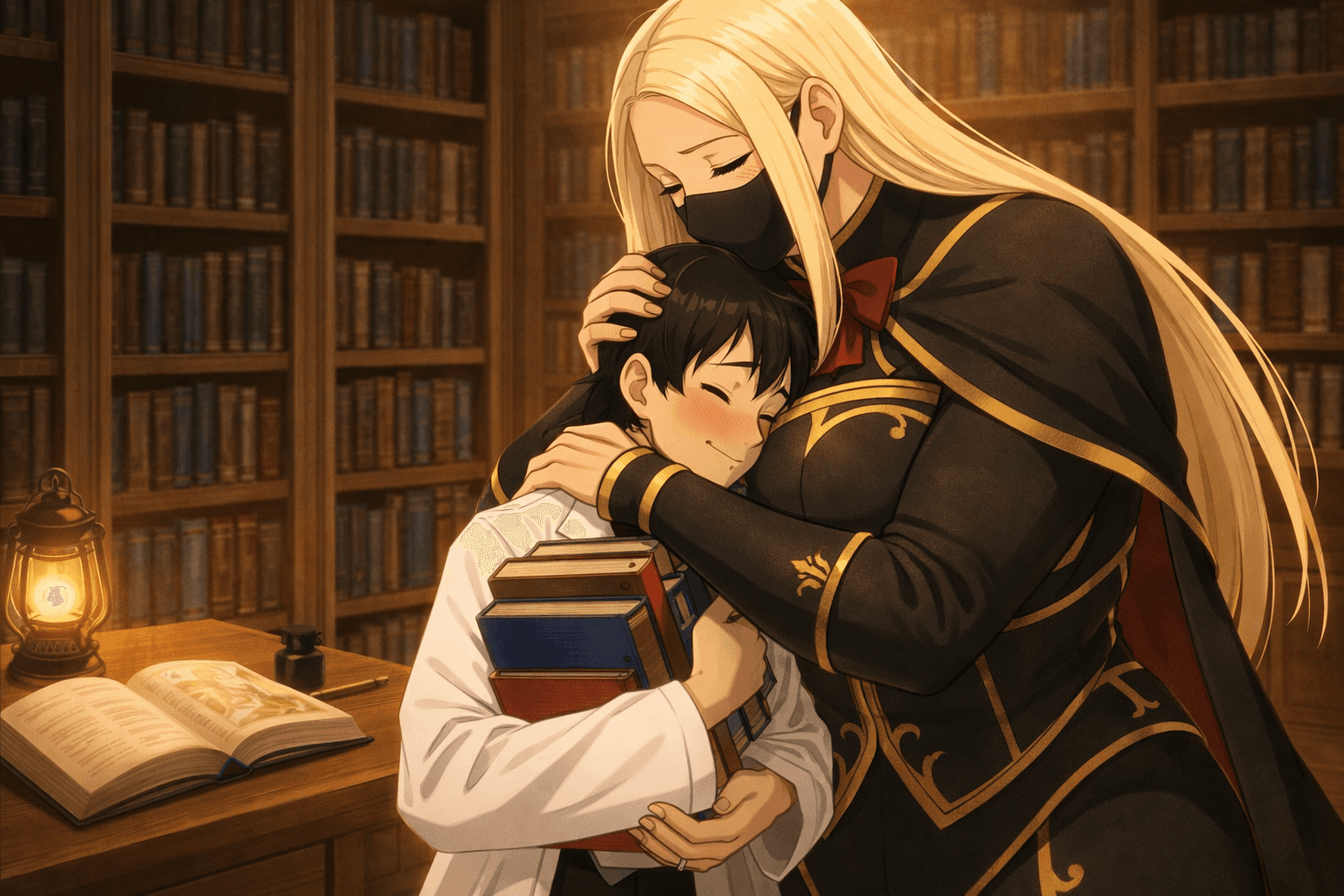
The Clinic of Warm Flesh, set in a unique, matriarchal, bio-spiritual world. The narrative follows Iyed, a young man who is considered a failure in a society where power is tied to female biology and spiritual-erotic prowess. He is not tall, muscular, or "arousing," and his academic degree in "Integrative Psycho-Somatic Theology" is initially seen as useless by his family. The story charts Iyed's journey from a shamed outcast to a vital, respected, and unique practitioner at the titular Clinic. He discovers that his perceived weaknesses—his softness, his ability to listen without imposing, his deep empathy—are actually his greatest strengths. He becomes a "witness" and a "container" for the complex, often traumatic, psycho-spiritual wounds of women, and in doing so, heals not only them but himself, ultimately redefining masculinity and healing in his world.
Cover
DraftPublicarccanonicalpreviewstory
Preview chapterExternal reading
Read the preview here, then continue on the external platform if you want the full long-form story.
Content
Iyed had graduated three days ago.
Not with pride. Not with joy.
But with a numbness that seemed to seep from the very paper of his diploma.
"Bachelor of Integrative Psycho-Somatic Theology."
That was the name of his degree—an interdisciplinary, prestigious program housed in the upper sanctums of the University of the Womb and Word, a place where scholars studied the interrelations between sexual function, ritual purity, trace anatomy, and the sacred maps of divine arousal. It was a demanding program, difficult to enter and harder to survive. He had made it. He had passed. But the house he returned to did not smell of incense or celebration. It smelled of vinegar, old cumin, and the smoke of bitter eyes.
His mother hadn't even looked at the diploma.
Instead, she'd muttered,
"So. You learned how to touch people without touching them. What now, little ghost?"
He didn't reply. Iyed never replied when she used that tone—half-sarcastic, half-regal, with that nasal drag that made every word sound like a curse wrapped in silk. She had once been proud of him—when he was a boy, memorizing sacred anatomy charts, scoring high in pre-theological bio-ethics, dreaming of becoming a specialist in organo-spiritual dysfunction. But now that he was a man—or what passed for one in a world ruled by titanic women, Qur'anic flesh, and sacred breasts that nursed entire provinces—his victories felt like trivia.
He wasn't tall.
He wasn't muscular.
He wasn't arousing.
And worse still—he had never been sealed inside a Sheikha.
"Why didn't you become a sex architect?"
"Why didn't you apply for trace engineering?"
"Why didn't you at least look like your uncle Tahmid when he was your age?"
The questions came from every corner. His aunts, his cousins, even the maid.
But the worst came from his younger sister, Lamis.
"So what exactly do you do, ya akhi?
Stroke scrolls while the rest of us shape nations with our wombs?"
The laughter. The click of their tongues. The sound of the coffee cup being slammed on the marble counter—his mother again.
"Wallahi, if I had known, I would've sealed you early and asked for another."
"Do you even have a trace anymore? Or has it fled your shame?"
He spent his hours in his small, narrow room, lined with books on Neuro-Erotic Faith Failures, Symbolic Erectile Collapse, and the sacred work of Sheikha Qadria al-Baida, who once healed an entire village of impotent men with nothing but her sweat and her voice. Iyed studied their methods. He annotated their manuscripts. He dreamed of joining a research sanctuary—like Dar al-Ilm wa-l-Jasad, or Bayt al-'Ara—where the most complex cases of bodily failure and spiritual arousal were studied under the maternal guidance of high Sheikhat.
But nobody was hiring.
He sent out 47 letters. No answer.
Until yesterday.
The message had come via scented seal—a thing almost unheard of. Only the elite Sheikhat still used them, their perfumes mixed with strands of divine milk and the faint chemical signature of their wombs.
The envelope was black, rimmed with gold, and heavy.
Iyed had trembled when he opened it. The parchment inside was soft, thick, and still warm.
It read:
To Iyed ibn Maryam al-Qusayri, graduate of Psycho-Somatic Theology,
Peace and mercy upon your suffering.
We have read your thesis.
We are not unimpressed.
Report to the Southern Gate of Bir Zala at the fourth hour after dawn.
Do not tell your mother.
Do not bring food.
Do not bring pride.
—Sheikha Rahima al-Hanuf
Custodian of Trace and Flesh
First Womb of the Hidden Clinic
He read it ten times.
His hands smelled like the envelope all night.
He dreamed of nothing—but heat, silence, and a voice he had never heard whispering,
"You've suffered enough. Now come. We need you."
He didn't sleep.
The letter lay beneath his pillow like a secret pulse, its warmth soaked into the sheets, its scent invading his breath every time he turned. His spine ached from lying too stiff, too afraid the paper might crumple beneath his weight.
At dawn, he rose. Not with purpose, but with the heavy inertia of someone pretending to have none.
He dressed simply: a soft ivory jubba, his old university shawl still bearing the faded emblem of the Faculty of Psycho-Somatic Theology—a stylized vulva flanked by wings, a calligraphic sīn curled beneath it, marking sacred pleasure as divine knowledge.
He stepped into the kitchen.
His mother was already there.
She didn't look up from the stove. The skillet hissed. Oil popped. Eggs curled.
"Still here?" she asked flatly.
No "sabah al-khayr." No glance. Just the scent of eggs and the tightening of her jaw.
Iyed stood silently by the doorway, hands behind his back like a child caught in someone else's house.
"You didn't go out yesterday. Again. Not for prayers. Not for a job. Not for shame. Just stayed here. Like dust that refuses to be swept."
He swallowed. His voice came small and dry.
"I got a letter."
She paused, tongs still in her hand.
Then, a bitter laugh.
"Did your cocks send it an apology for not working?"
His face flushed.
Still, he said:
"It was from a Sheikha."
Now she turned. Slowly. Her face, always sharp, always beautifully lined, looked at him with something halfway between suspicion and pity.
"What kind of Sheikha sends letters to little boys who can't even harden when touched?"
He held up the parchment.
She walked over—her feet bare, her robe rich with the scent of musk and orange peel—and snatched it from his fingers. She read quickly. Her lips twitched. Then went still.
When she looked up at him, her voice had lowered.
"This place exists."
"I know."
"And you think you can work there? With her? You think she'll let you touch the kinds of wounds only sealed men should touch?"
"She didn't ask for a sealed man," he said quietly. "She asked for me."
Silence.
Then:
"Then go."
She shoved the letter back into his chest.
"But don't return here. Not after this. Not after placing your name beside hers."
He took the parchment.
He nodded.
But before he turned away, he said—barely above a whisper:
"You raised me to know the sacred body.
But you never let me offer mine."
She blinked. And for a moment—just one—there was the ghost of regret on her face.
"And whose fault is that?"
He passed by Lamis's room before leaving. The door was cracked. She never locked it—not from him.
She was curled in bed, uncovered, breathing softly. Her sheets were pale rose, littered with handwritten scrolls of her anatomy coursework. A diagram of milk-vein curvature hung above her desk, annotated in her precise, beautiful script.
He watched her sleep, remembering when they studied together, argued about the neuro-symbolic link between semen dreams and misdirected salawat.
He stepped inside.
He reached for a scroll and scribbled three words on the back of one of her diagrams.
"I forgive you."
—Iyed
He paused.
Then added,
"Try to forgive me too."
He left it on her pillow, next to her sleeping cheek.
She stirred. Her lips moved.
But didn't wake.
The sun was rising now—melting pink across the courtyard walls.
He stepped into the still morning, wrapped in shame, parchment, and faint hope.
He walked toward the Southern Gate of Bir Zala,
where Sheikha Rahima was waiting.
And behind him, nothing called his name.